 How-to
How Do You Verify Electrical Work Is Code Compliant?
Last Updated: November 26, 2026
Quick Summary
To verify electrical code compliance, pull the permit record from your local building department and confirm a passed final inspection, which is the strongest proof of compliant work. Also check the electrician's license online and request the written inspection report rather than a verbal claim.
- Most jurisdictions require a permit for new circuits, panel changes, service upgrades, and major remodels.
- A permit with no final inspection or an unresolved correction notice is a red flag.
- Search the license number online to confirm it is active and check for complaints.
- Never remove panel covers or poke inside boxes yourself during a visual check.
- After a failed inspection, get the correction notice and a dated fix plan in writing.
Table of Contents
- Step 1: Confirm the Electrical Permit and Inspection Requirements for Your Project
- Step 2: Learn How to Check If Electrical Work Passed Inspection
- Step 3: Know How to Verify an Electrician's License Before You Hire
- Step 4: Use an Electrical Inspection Checklist for Homeowners to Spot Red Flags
- Step 5: Document Existing or Disputed Work With Evidence
- Step 6: Know What Happens After a Failed Inspection
- Step 7: Decide When to Hire a Professional Inspector
- Frequently Asked Questions
Step 1: Confirm the Electrical Permit and Inspection Requirements for Your Project
Confirm permit and inspection rules before any work begins. Electrical code compliance is a paper trail as much as a physical result: a job without a permit has no inspection record, and no record means no proof of compliant work. Most jurisdictions require a permit for new circuits, panel changes, service upgrades, and major remodels; simple swaps like a light fixture often do not, so check your local building department first. To have one licensed team handle wiring and inspections, request an electrical estimate before anything begins.
Step 2: Learn How to Check If Electrical Work Passed Inspection
Pull the permit record from the authority having jurisdiction, usually the city or county building department, which posts status online or by phone. A passed final inspection is the strongest proof of electrical code compliance; a permit with no final inspection, or a correction notice with no reinspection logged, is a red flag. Ask for the written inspection report itself, not a verbal claim.
Step 3: Know How to Verify an Electrician's License Before You Hire
License checks take minutes and prevent expensive mistakes. Licensing boards and contractor registries generally offer an online lookup: search the license number, confirm it is active, and check for complaints or disciplinary actions. You can learn about Kirk Electrical & Construction and our residential services, and view our electrical project gallery to judge completed work before you hire.
Step 4: Use an Electrical Inspection Checklist for Homeowners to Spot Red Flags
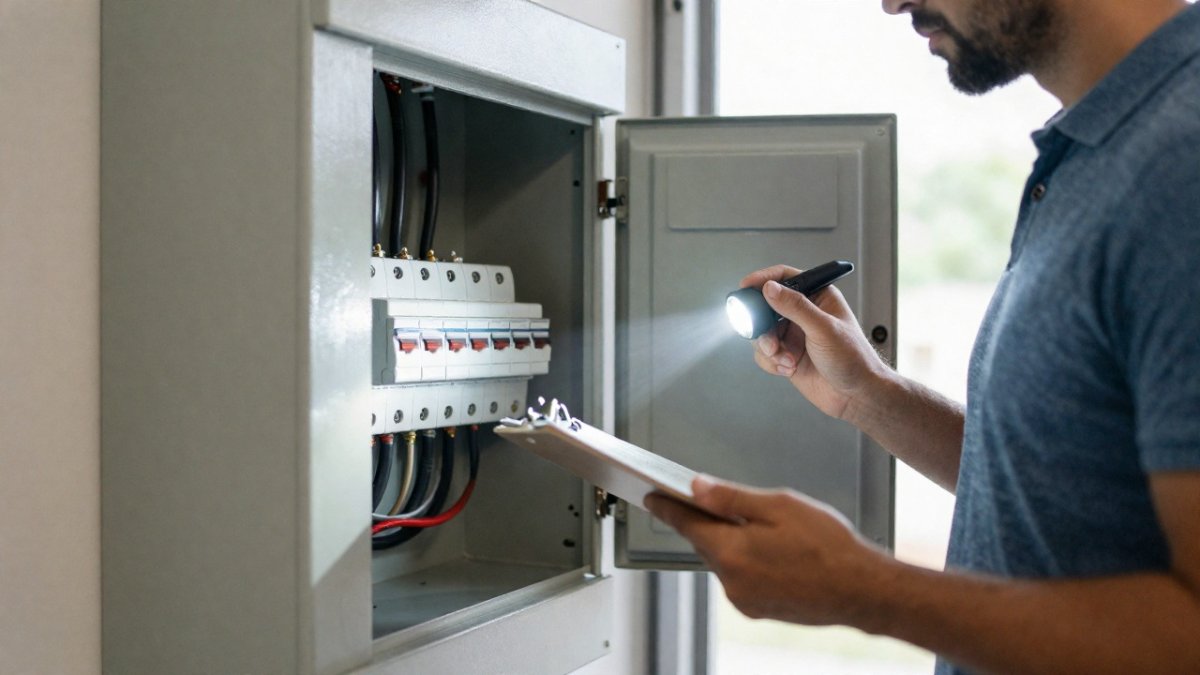
A homeowner checklist catches warning signs but does not replace an electrical inspection. Never remove panel covers or poke inside boxes yourself, shock and fire hazards are real, and some defects are invisible from outside.
Step 5: Document Existing or Disputed Work With Evidence
Older homes often carry work done years ago with no permit record, and you cannot verify what was never inspected, so gather installation dates, receipts, contractor names, and photos. Then order a professional electrical compliance check: a licensed electrician can open panels, test circuits, and compare installed work with current code requirements, though only the authority having jurisdiction can confirm what applies to your home. Keep permit records, inspection reports, photos, and written findings in one folder to protect you in insurance claims, home sales, and disputes.
Step 6: Know What Happens After a Failed Inspection
A failed inspection is not the end of the project: the inspector issues a correction notice listing each code violation, and your contractor fixes the items and schedules a reinspection. Most failures are small, missing cover plates, improper grounding, unlabeled circuits, or unprotected cable runs. Get the correction notice and a dated fix plan in writing, then confirm the reinspection happens; an open notice with no reinspection hides the problem.
Step 7: Decide When to Hire a Professional Inspector
Call a professional when work involves a panel, service entrance, grounding, or anything behind a wall, also before buying a home with recent electrical updates, or when an insurer asks for proof of compliant work.
| Situation | Who Verifies | What You Get |
|---|---|---|
| New permitted work | Local electrical inspector | Signed inspection report |
| Unpermitted older work | Licensed electrician | Written findings and repair list |
| Failed inspection | Inspector plus contractor | Correction notice and reinspection |
Verifying electrical code compliance comes down to records, licensing, and a careful visual check, in that order. Kirk Electrical & Construction provides residential electrical services in the Simpsonville, South Carolina area, including panel upgrades, standby generators, and new construction wiring and lighting.
Frequently Asked Questions
Does all electrical work need to be inspected?
Most jurisdictions require a permit and inspection for new circuits, panel changes, service upgrades, and major renovations, though rules vary by local code cycle and amendments. Minor replacements like swapping a light fixture often do not require a permit. Check with your local building department before work begins so you know which inspection milestones apply, and keep permit records on file in case you sell the home or file an insurance claim.
How do I find out whether electrical work passed inspection?
Contact the authority having jurisdiction that issued the electrical permit and request the inspection report or permit records for your address. A passed inspection usually shows a signed approval and, in many areas, a green tag on the panel or meter. If the record shows a correction notice instead, the work failed review and needs correction and reinspection before it is considered compliant. Ask for the report in writing so you have documentation for insurance or resale.
Can I inspect electrical work myself to check for code violations?
You can do a limited visual check for obvious red flags: an unlabeled panel, exposed wiring, missing cover plates, scorch marks, or receptacles that feel warm. What you cannot do is confirm electrical code compliance, because that requires understanding the current code edition, local amendments, overcurrent protection sizing, and bonding requirements. A licensed electrician or the electrical inspector is the only party who can verify and document compliance, especially for existing or disputed work.